Cyber Insights: Kyowon Data Breach

Concise Cybersecurity Intelligence for Decision-Makers

Kyowon Cyber Insights

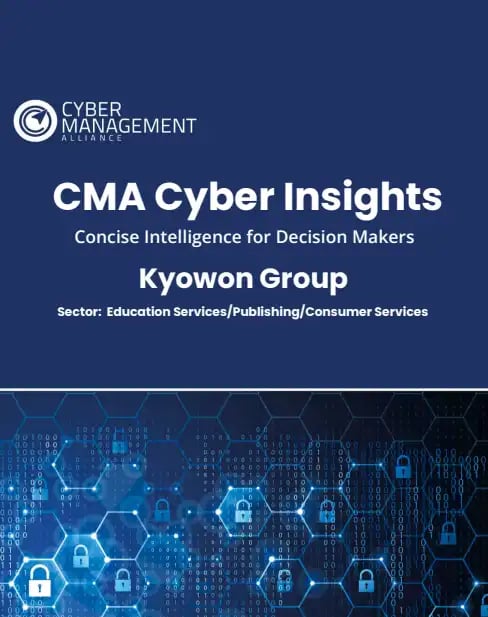
Download Our Cyber Insights Document on the Kyowon Data Breach

The Kyowon Data Breach highlights how even well-established organisations can be exposed to serious risk when identity, access controls, and third-party dependencies are not sufficiently hardened. The incident reportedly led to unauthorised access to internal systems and sensitive personal data. As with many modern breaches, the impact extended beyond IT disruption, triggering regulatory scrutiny, reputational damage, and a heightened risk of downstream fraud for affected individuals.

In this CMA Cyber Insights document, we break down the Kyowon breach in clear, practical terms. The analysis focuses on the technical and operational gaps exposed by the incident, including identity security weaknesses, monitoring blind spots, and the absence of sufficiently rehearsed incident response processes. More importantly, it draws out the lessons that security leaders and executives should apply immediately to reduce exposure to similar attacks in their own environments.

Download the Kyowon Data Breach – CMA Cyber Insights Document to get a fast, executive-friendly understanding of the breach timeline, attack mechanics, and real-world impact. The document is designed to help you quickly grasp what went wrong, why it matters, and what actions organisations should prioritise now to strengthen cyber resilience and incident readiness.

Disclaimer: This document has been created with the sole purpose of encouraging discourse on the subject of cybersecurity and good security practices. Our intention is not to defame any company, person or legal entity. Every piece of information mentioned herein is based on reports and data freely available online. Cyber Management Alliance neither takes credit nor any responsibility for the accuracy of any source or information shared herein.

  • ** GDPR ** We wholeheartedly believe your and our rights to privacy and in the GDPR. The bottom of the page explains how we use your data. 
  • Align with the GDPR requirements.
  • Increase your Breach Readiness.
  • Reduce your time to detect and respond.

Complete the form below to receive a copy of CMA Cyber Insights on the Kyowon Data Breach

cyber-essentials-certification
NCSC Certified Training B&W 300px
CSC

FAQs on Kyowon Data Breach

  • 1. What happened in the Kyowon data breach?
    South Korea’s Kyowon Group suffered a major cyber incident in January 2026 that resulted in unauthorised access to internal systems and raised concerns about the exposure of sensitive personal information. The incident disrupted parts of the organisation’s operations and prompted an investigation into the extent of the compromise and the data potentially affected.
  • 2. Was the Kyowon cyber attack a ransomware attack?
    The Kyowon incident was reported as a suspected ransomware attack. The company experienced disruption to internal systems and initiated incident-response measures while investigating the breach. At the time of the initial reports, no specific ransomware group or threat actor had been publicly confirmed as responsible.
  • 3. What data was potentially exposed in the Kyowon breach?
    The incident reportedly involved unauthorised access to internal systems and sensitive personal data. Such exposure can create risks extending beyond the immediate cyber incident, including identity theft, phishing, social engineering and other forms of downstream fraud targeting affected individuals.
  • 4. What caused the Kyowon data breach?
    The complete technical root cause of the Kyowon breach has not been publicly established. However, analysis of the incident highlights important areas of cyber risk, including weaknesses in identity security and access controls, monitoring blind spots and third-party dependencies. Organisations should therefore avoid assuming a specific attack vector until forensic investigations provide sufficient evidence.
  • 5. What does the Kyowon breach teach organisations about identity security?
    The Kyowon incident demonstrates why identity has become a critical security perimeter. Organisations should enforce strong authentication, apply least-privilege access, closely monitor privileged and anomalous account activity, regularly review access rights and rapidly revoke credentials that may have been compromised. Strong identity controls can help prevent an initial compromise from escalating into widespread access to sensitive systems and information.
  • 6. Why are monitoring and detection capabilities important during a data breach?
    Effective monitoring can help organisations identify unusual authentication attempts, privilege escalation, suspicious data transfers and other indicators of compromise before attackers cause further damage. The Kyowon incident highlights the importance of reducing monitoring blind spots and ensuring security teams have sufficient visibility across critical systems, identities and third-party access.
  • 7. What should organisations do after discovering a breach similar to the Kyowon attack?
    Organisations should rapidly activate their incident response plan, isolate affected systems, preserve forensic evidence, investigate compromised identities and determine whether sensitive information has been accessed or exfiltrated. They should also assess regulatory notification requirements, communicate appropriately with affected stakeholders and prioritise the secure restoration of critical business services.
  • 8. What cybersecurity lessons can businesses learn from the Kyowon data breach?
    The Kyowon breach reinforces the need to combine preventative security controls with strong cyber resilience. Businesses should strengthen identity and access management, improve security monitoring, assess third-party dependencies and regularly rehearse their incident response procedures. Cyber tabletop exercises can help technical teams and executives test whether they can make effective decisions when a real breach creates simultaneous operational, regulatory and reputational pressures.

We are industry experienced practitioners when it comes to cyber security training & cyber security consultancy services

1487652208_graduationcap

Training

We offer a host of courses including our NCSC Assured Training in Cyber Incident Planning and Response and our NCSC Assured Training in Building and Optimising Incident Response Playbooks.

1487652701_like

Virtual CISO Services

Hands On, full-support 'Security As a Service', specifically designed for organisations that require access to experienced cybersecurity, governance, risk and compliance professionals.

1487652784_calendar-3

Virtual Cyber Assistant

A unique, affordable, subscription-based, cybersecurity service for small to medium businesses, offering 280+ services in cybersecurity.

1487652846_microphone

Cyber Crisis Tabletop Exercises

Scenario-based, verbally-simulated tabletop attack exercises that test your organisation's ability to effectively respond to a cyber-attack.


1487652632_search

Ransomware Tabletop Exercise

Measure your organisation’s Ransomware Readiness with a unique blend of verbal and visual simulations and ransomware scenario walkthroughs.

1487652567_line-chart

Executive Cyber Awareness Sessions

Specially designed for executive management, CEOs and boards of directors, engaging them in a business context to help explain the threats and risks from cyber-attacks.

How we use your data:

  • The form above collects personal information so we may email you the requested information and pressing the "Get your free copy now"  button acts as informed consent for this processing purpose. Consequently we may be in touch to:

    • Update you when we host our ground-breaking Wisdom of Crowds events in your country or region.
    • Keep you posted on free resources and documents around Wisdom of Crowds events and its outputs. (For example, we tend to create insightful mind maps and we also are the creators of free to view Insights with Cyber Leaders Video Interviews. )
    • Ping you a note about upcoming FREE educational webinars on GDPR and Cybersecurity.
    • Inform you of any upcoming Data Breach Response or Cyber Incident Response training.  
  • In its purest interpretation, this act of us communicating with you is direct marketing and is processed on the basis of our legitimate interest and your engaging in our services. All marketing communication will include an unsubscribe button or other method of ending communication.