
Date: 21 July 2026
.webp?width=1170&name=Crypto_Wallets_Security_with_bgc%20(1).webp)
A crypto wallet API can move real money in milliseconds. That speed is the whole point, and it's also the reason attackers pay so much attention to these endpoints. When you connect an application to a wallet through an API, you're handing over the ability to sign transactions, check balances, and shift funds between addresses.
Get the security wrong and the damage isn't a bad user experience. It's stolen assets that no one can claw back.
For teams building on top of managed infrastructure, understanding what crypto WaaS is matters just as much as understanding the code you write around it. This article looks at where these APIs break, how providers try to keep them safe, and what you should check before trusting one with production traffic.

What a Crypto Wallet API Actually Does
A crypto wallet API sits between your application and the blockchain. Your app never talks directly to the chain. It sends a request to the API, and the API handles the heavy lifting: generating addresses, holding or referencing private keys, building transactions, and broadcasting them to the network.
There are two broad models you'll run into:
- Custodial APIs, where the provider holds the private keys and signs transactions on your behalf.
- Non-custodial APIs, where keys stay on the user's side or in isolated hardware, and the API only helps assemble and relay signed transactions.
The difference decides who carries the risk. With a custodial setup, a breach of the provider's key storage can drain every account at once. With non-custodial designs, a single compromised key usually affects one user. Neither model is automatically safer. Each one just moves the weak point somewhere else.
Where Crypto Wallet APIs Break
Most wallet API failures don't come from exotic cryptography attacks. They come from ordinary security mistakes that carry outsized consequences because money is involved. Here are the ones that show up again and again.
Private Key Management Gone Wrong
Private keys are the entire game. Anyone who holds a key controls the funds tied to it. That fact makes key storage the first thing an attacker probes.
Common failures include:
- Storing keys in plaintext inside a database or config file.
- Keeping keys in application memory longer than a signing operation requires.
- Logging keys or seed phrases by accident during debugging.
- Using weak entropy when generating keys, which makes them guessable.
A well-built API keeps keys inside a hardware security module (HSM) or a trusted execution environment, so the raw key material never leaves protected hardware. Signing happens inside that boundary, and the plaintext key is never exposed to the application layer. If a provider can't explain where keys live and who can reach them, treat that as a warning sign.
Authentication and Authorization Flaws
An API that signs transactions needs to know exactly who is asking and whether they're allowed to. Weak authentication turns a wallet API into an open faucet.
Typical problems look like this:
- API keys with no expiry, shared across teams, and pasted into client-side code.
- No distinction between read access and transaction-signing access.
- Missing rate limits, which let an attacker brute-force credentials or spam requests.
- Session tokens that don't rotate, so one leaked token stays valid for weeks.
The fix is layered. Use short-lived tokens, separate permissions by scope, and require a second factor for any action that moves funds. A read-only integration should never carry the same key that can authorize a withdrawal.

Injection and Input Handling Attacks
Wallet APIs accept parameters: destination addresses, amounts, memo fields, callback URLs. Every one of those inputs is a place where an attacker can try to slip in something unexpected.
You'll see attempts like:
- SQL injection through unvalidated query parameters.
- Command injection when input reaches a system shell.
- Manipulated amount or address fields that redirect funds.
- Malicious callback URLs used to trigger requests against internal systems.
The defense is unglamorous but effective: validate every input against a strict schema, reject anything that doesn't fit, and never build queries or commands by stitching strings together. Treat all input as hostile until proven otherwise.
Insecure Data in Transit and at Rest
Data has two states, and both need protection. In transit, that means enforcing TLS on every connection and refusing plain HTTP outright. At rest, it means encrypting stored data so a database dump alone gives an attacker nothing usable. A surprising number of breaches trace back to a single unencrypted backup or a misconfigured storage bucket left open to the internet. Encryption doesn't stop someone from copying your data. It stops them from reading it.
How WaaS Providers Handle Security
Managed wallet services take on a lot of this burden, which is part of their appeal. Instead of building key management from scratch, you rent infrastructure that already handles it. The catch is that you're trusting someone else's engineering, so you need to know what they're doing.
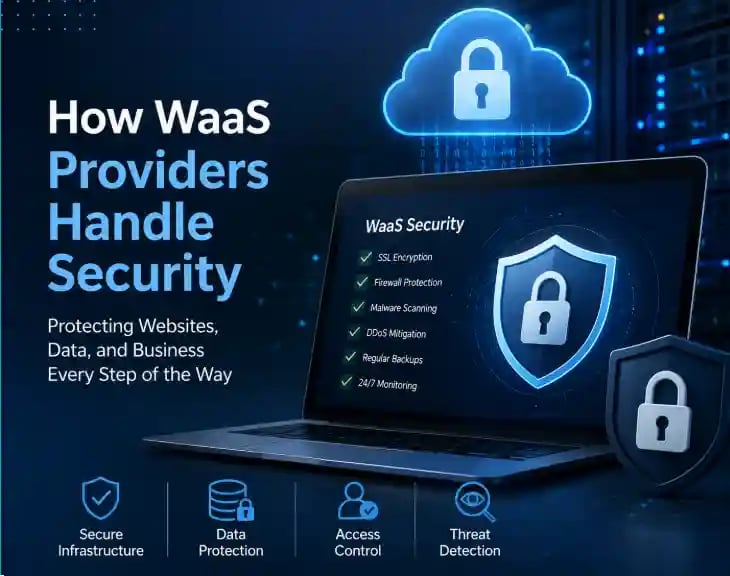
Good providers usually offer:
- HSM-backed key storage, keeping raw keys out of software entirely.
- Multi-party computation (MPC), which splits a key into shares held by different parties so no single machine ever reconstructs the whole key.
- Multi-signature support, requiring several approvals before a transaction goes through.
- Transaction policy engines, letting you set spending limits, address allowlists, and approval rules.
MPC deserves a closer look. Instead of storing one key that could be stolen, the system distributes signing power across multiple nodes. A transaction only gets signed when enough shares cooperate. An attacker who compromises one node walks away with nothing useful. That design removes the single point of failure that plagues traditional key storage.
Still, offloading work to a provider doesn't erase your responsibility. If your API keys leak or your own servers get compromised, the provider's HSM won't save you. Security is shared. They protect the vault. You protect the keys to the vault.
Encryption Standards Worth Expecting
Encryption is where marketing language often outruns reality, so it helps to know what solid looks like. You don't need to be a cryptographer to ask the right questions.
At a minimum, a serious wallet API should use:
- AES-256 for encrypting stored data.
- TLS 1.2 or 1.3 for all network traffic, with older protocols disabled.
- ECDSA or EdDSA for transaction signing, matching whatever the target chains require.
- Strong random number generation sourced from a proper cryptographic RNG, not a general-purpose one.
Beyond the algorithms, ask about key rotation. Encryption keys shouldn't live forever. A provider that rotates keys on a schedule and can revoke a compromised key quickly is in far better shape than one that set things up once and never touched them again.
Regulatory Compliance: KYC and AML
Security isn't only about stopping hackers. It's also about knowing who's using your service and where the money comes from. Regulators expect crypto businesses to run identity and anti-money-laundering checks, and wallet APIs increasingly build this in.
Compliance requirements you'll commonly face include:
- KYC (Know Your Customer) verification, confirming a user's real identity before they transact.
- AML (Anti-Money Laundering) screening, checking transactions against sanctions lists and flagging suspicious patterns.
- Transaction monitoring, watching for structuring, rapid movement across many addresses, or links to known bad actors.
- Travel Rule support, which requires sharing sender and receiver details for transfers above a set threshold.
A wallet API that hooks into these checks saves you from bolting compliance later. That matters because retrofitting KYC after launch is painful and often forces you to re-verify your whole user base. Handling identity from the start keeps you on the right side of regulators and blocks a chunk of fraudulent activity before it reaches the chain.

What to Look For in a Secure Wallet API
You've seen where things break and how good providers defend against it. Now comes the practical part: judging an API before you commit. Use this as a checklist during evaluation.
- Clear key custody model. Know whether keys are held by you, the provider, or split via MPC, and where signing happens.
- Granular permissions. Separate keys and scopes for reading data versus moving funds.
- Independent security audits. Look for recent third-party penetration tests and code reviews, not just a claim of being audited.
- SOC 2 or ISO 27001 certification. These show the provider follows documented security processes, not ad hoc habits.
- Configurable transaction policies. Spending limits, allowlists, and approval flows you control.
- Webhook and callback verification. Signed webhooks so you can confirm a notification actually came from the API.
- Transparent incident history. A provider that publishes past incidents and how they responded is more trustworthy than one that stays silent.
- Clear documentation. Vague docs often hide vague security. Precise docs signal precise engineering.
Run a small test integration before going live. Try to break your own setup. Send malformed requests, test what a leaked read-only key can and can't do, and confirm that rate limits actually trigger. The point isn't to trust a vendor's promises. It's to verify them.
The Takeaway
Crypto wallet APIs concentrate risk in a way few other systems do, because the thing they move can't be undone once it's gone. Most breaches come down to fundamentals: keys stored carelessly, authentication treated as an afterthought, inputs trusted when they shouldn't be. Managed WaaS providers handle much of the hard cryptography for you, but they don't absolve you of protecting your own credentials and infrastructure.
Pick a provider that can explain its key custody in plain terms, backs its claims with real audits, and builds compliance in rather than tacking it on. Then verify everything yourself before real funds ever touch the system. Security here isn't a feature you switch on. It's a set of decisions you keep making, from the first integration test to every transaction after it.
.webp)


.webp)