Date: 21 August 2026
Phone scams claimed more than $25.4 billion from American adults in a single year, with 21% of the population — over 56 million people — falling victim at least once, according to Truecaller's US Spam & Scam Report. The calls sound real. The numbers look familiar. And the tactics are getting more convincing by the month. Knowing how to spot suspicious calls and verify unknown numbers before engaging is now a basic personal finance skill, not a niche concern.
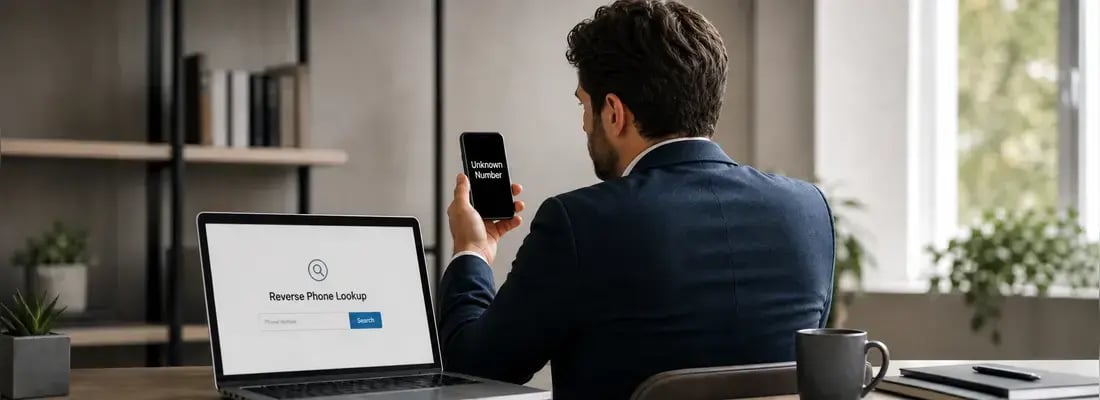
One of the most effective first steps is running a reverse phone lookup before responding to any call you don't recognize. Tools like Scannero let you enter an unknown number and see the identity behind it in under a minute — without the caller knowing you checked. That context changes everything about how you respond.
Why Phone Scams Are Getting Harder to Spot
The average phone scam a decade ago relied on obvious scripts and pressure tactics. Today's scammers use three tools that make their calls significantly harder to dismiss:
- Caller ID spoofing: Fraudsters can make any number appear on your screen, including your bank's official line or a local area code
- AI voice cloning: Software available to criminals can replicate a family member's voice from 30 seconds of audio found online
- Personalized targeting: Data brokers and dark web leaks give scammers your name, employer, address, and recent purchases before they ever dial
82% of Americans now believe AI is making scams harder to spot, according to IPX1031's 2025 Fraud and Identity Theft Report. The combination makes gut instinct unreliable. A call from "Mom" asking for emergency cash may not be Mom.
Caller ID Spoofing
Caller ID is not a verified identity system. It displays whatever number the caller programs it to show. Scammers exploit this by making calls appear to come from your bank, a government agency, or a number within your own area code — a tactic called neighbor spoofing. The number on your screen tells you nothing about who is actually calling.
AI Voice Clone Scams
Scammers now use AI to generate voice clones of people you know and trust. A 30-second clip from a public video or voicemail is enough. They use these clones to run grandparent scams — calling elderly relatives pretending to be a grandchild in trouble — or to impersonate executives in corporate fraud attempts. One practical counter-measure: agree on a private "safe word" with immediate family members that anyone can ask for during a suspicious call.

The Most Common Types of Phone Scams
Understanding each scam type makes the warning signs easier to recognize in real time.
Vishing (Voice Phishing)
Vishing is the umbrella term for phone-based phishing. A scammer poses as a trusted source — your bank, the IRS, Medicare, a tech company — and creates urgency to extract personal information or payment. Vishing calls often claim there is suspicious activity on an account, a warrant for your arrest, or a virus on your device. None of these claims are true, and none warrant sharing information over an unverified phone call.
Government Impersonator Scams
These calls claim to be from the IRS, Social Security Administration, local police, or immigration authorities. They threaten arrest, deportation, or fines unless you pay immediately — usually by wire transfer, gift card, or cryptocurrency. The IRS does not call to demand immediate payment. The SSA does not threaten to suspend your benefits over the phone. Any call claiming otherwise is a scam.
Tech Support Scams
Someone claiming to be from Microsoft, Apple, or your internet provider tells you a virus has been detected on your device. They ask you to install remote access software so they can "fix" it. Granting that access gives the caller full control of your machine, your files, and any accounts logged in at the time.
One-Ring Scams
Your phone rings once from an unfamiliar number — often an international code — then stops. The goal is to make you curious enough to call back. When you do, you are connected to a premium-rate line that charges fees per minute. The scammer profits. Never call back an unknown number that rang briefly without leaving a voicemail.
Smishing (SMS Phishing)
Scammers send text messages with links to fake login pages or malware downloads, often disguised as package delivery notifications, bank alerts, or prize claims. The same rules apply as with phone calls: do not click links from unknown senders, and never enter credentials on a page you reached through an unsolicited text.

Red Flags: How to Tell If a Call Is a Scam
These warning signs apply across every type of phone scam:
- The call is unexpected and involves a request for personal information or money
- The caller creates urgency — "act now or face consequences"
- Payment is requested in gift cards, wire transfer, cryptocurrency, or cash via courier
- The caller asks for your Social Security number, PIN, bank account number, or a multifactor authentication code
- You are told not to tell anyone about the call
- The caller refuses to let you call back on an official number you find independently
- The offer sounds too good to be true — a lottery win, a prize, an unexplained refund
- The "bank" or "government agency" caller already knows some of your personal data and uses it to seem legitimate
Any single one of these is enough to hang up.
How to Verify an Unknown Caller Before You Engage
The gap most people leave open is between receiving a suspicious call and deciding how to respond. Hanging up and hoping is passive. Calling back the number the scammer gave you loops you back to them. What actually breaks the cycle is checking who the number belongs to before you do anything else.
When you receive a call from an unfamiliar number and aren't sure whether it's legitimate, running a reverse phone lookup gives you the information you need to make that decision with confidence. Scannero's reverse lookup searches public databases and aggregated sources to reveal the name, carrier, location, and any reported scam activity associated with the number. You get that result before you call back, not after.
Here is how to use it:
- Note the number from the missed call or caller ID display
- Go to scannero.net and enter the number in the reverse lookup field
- Review the identity report — name, carrier, location, and any scam flags attached to that number
The entire process takes less than two minutes and happens without the caller knowing you searched. If the number comes back clean and matches the organization they claimed to represent, you can call them back on their verified line. If the report shows the number is a known scam line or unregistered, you have your answer without giving up a second of your time — or a word of personal information.
What to Do During a Suspicious Call
If you are already on a call and something feels wrong, follow these steps:
- Hang up — you are under no obligation to stay on the line or be polite to a scammer
- Do not press buttons on a robocall — interacting confirms your number is active and generates more calls
- Do not share any personal information — account numbers, PINs, Social Security numbers, or MFA codes
- Do not call back on the number the caller gave you — look up the official contact number independently via the company's website
- If the caller claimed to be someone you know, hang up and call that person directly using a number you already have saved
Feeling pressured to act immediately is itself the signal to stop and pause. No legitimate institution makes time-sensitive demands over an unverified phone call.

How to Block Scam Calls and Reduce Exposure
Cutting down the volume of suspicious calls reaching you requires a few parallel steps:
- Register your number at donotcall.gov — this will not stop illegal scammers but reduces legitimate telemarketing noise
- Enable your carrier's built-in spam-labeling service — AT&T Call Protect, T-Mobile Scam Shield, and Verizon Call Filter are all free at the basic level
- Set your phone to send unknown callers to voicemail — if the call is real, they will leave a message
- Avoid posting your phone number publicly on social media profiles or comment sections
One angle that most guides miss: your number may already be circulating among scammers because of a data breach. Scannero's Email & Phone Leak Checker scans known breach databases and tells you whether your phone number or email address has been exposed. If your data has leaked, you can expect elevated scam call volume — and that context helps you respond accordingly rather than assuming the calls are random.
Comparing Phone Scam Protection Tools
|
Feature |
Scannero |
Truecaller |
BeenVerified |
|
Reverse phone lookup |
Yes |
Yes |
Yes |
|
No app install required |
Yes |
No (app required for full features) |
No (account required) |
|
Email & phone leak check |
Yes |
Not available |
Not available |
|
Phone location tracking |
Yes |
Limited |
Not available |
|
Works without target's device |
Yes |
Partial |
Yes |
|
Scam number database |
Yes |
Yes |
Partial |
For someone who wants to check a suspicious number quickly without downloading anything or creating an account on their device, Scannero's web-based lookup covers the most ground. It is particularly useful when you receive a call on a work phone or a device where installing apps is restricted — you run the lookup from any browser and get the information you need immediately.
How to Report Phone Scams
Reporting scam calls does two things: it contributes to databases that flag known scam numbers, and it gives authorities the volume of complaints needed to investigate and shut down operations.
- Report to the FTC at reportfraud.ftc.gov — include the number, what the caller said, and any payment method requested
- Report to the FCC at consumercomplaints.fcc.gov — specifically for caller ID spoofing and illegal robocalls
- Block the number on your device immediately after reporting
- If the scam involved impersonation of a specific company (your bank, Amazon, the IRS), notify that company's fraud team directly
Two-thirds of scam victims in 2025 reported they were unable to recover any money lost, according to the Stop Scams Alliance and Gallup. Reporting before money changes hands — or as soon as it does — gives the best chance of the number being flagged for other potential victims.

Stay One Step Ahead of Scammers
The shift that matters most is moving from reactive to proactive. Most people wait until something goes wrong — a charge appears, personal data is misused, a family member falls for a scam — and then try to limit the damage. The more effective position is verifying first and engaging second.
That means letting unknown numbers go to voicemail. It means running a reverse phone lookup on any number you don't recognize before calling back. And it means checking whether your contact information is already in the hands of scammers via a data breach check.
If you receive an unfamiliar call and want to know who it belongs to before you do anything else, enter the number at scannero.net. You will know within minutes — and that knowledge is the difference between becoming a statistic and staying protected.
.webp)