Date: 30 March 2026
As digital services expand, organizations need faster and more secure ways to verify identities during onboarding and authentication processes. Traditional identity verification methods often rely on visual document checks or manual data entry, which can slow down verification flows and increase the risk of fraud.
NFC technology offers a more advanced approach. By using the embedded nfc chip found in modern electronic identity documents, organizations can securely extract identity data directly from the document itself. This technology enables real-time verification while improving both security and user experience.
Today, many digital onboarding platforms integrate nfc verification as part of their identity verification workflows. NFC allows systems to read encrypted data stored inside identity documents, making identity checks more reliable and resistant to tampering.
To understand how the technology works in practice, it is useful to explore how an nfc check reads document chips and verifies identity data during customer onboarding.
As more governments issue biometric passports and electronic ID cards, NFC-based identity verification is becoming a critical component of modern identity verification systems.

What is NFC?
Near Field Communication (NFC) is a wireless communication technology that allows devices to exchange data over very short distances, typically within a few centimeters.
NFC technology is widely used in everyday applications such as contactless payments, transportation cards, and product authentication. In identity verification, it enables devices to read data stored inside identity documents that contain an embedded nfc chip.
Many modern identity documents include such chips, including:
- Biometric passports
- National ID cards
- Residence permits
- Electronic driver’s licenses
These chips store encrypted identity information such as:
- The holder’s name
- Date of birth
- Document number
- Biometric data
- Digital signatures issued by authorities
To access this information, a device equipped with an nfc reader or nfc card reader can communicate with the chip through short-range wireless signals.
Most smartphones today are nfc enabled devices, which means users can verify identity documents simply by placing the document near the phone.
Because the chip data is cryptographically protected, NFC technology provides a secure method for transferring identity data.
How can NFC chips be used to verify identity?
Electronic identity documents contain a secure nfc chip that stores digitally signed information issued by government authorities.
During nfc identity verification, the system reads the information stored on the chip and compares it with the document’s visible information and the user’s biometric data.
This process helps confirm that:
- The identity document is genuine
- The chip data has not been altered
- The person presenting the document is its legitimate owner
The use of NFC chips significantly improves identity verification accuracy because the data stored in the chip is difficult to manipulate or forge.
In many identity verification workflows, NFC reading complements traditional document scanning. While visual checks verify the appearance of the document, the chip provides cryptographically secured information directly from the issuing authority.
This approach is particularly valuable for detecting fraudulent documents or identity manipulation attempts.
Because many electronic passports and ID cards support NFC, organizations can use NFC-based identity verification across a wide range of digital services.

How does NFC verification work?
The nfc verification process typically occurs during digital onboarding or identity verification workflows.
Although implementations may vary, most NFC verification flows include several key steps.
Document Scanning
The verification process begins when a user scans their identity document using a mobile device. The system captures an image of the ID document and extracts key information such as the document number and date of birth.
This information may also be used to access the document chip.
NFC Chip Reading
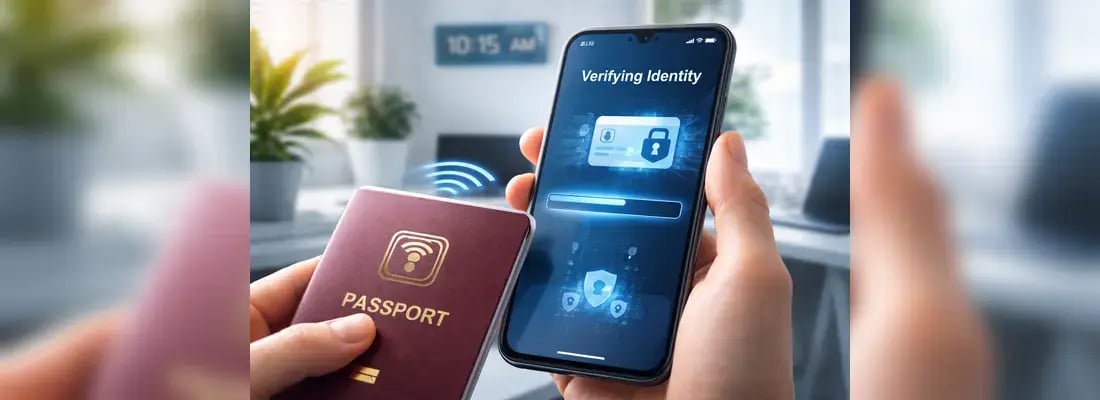
Next, the user places the identity document near the smartphone so that the device’s nfc reader can communicate with the embedded chip. This process is sometimes called an nfc check, where the system reads encrypted identity data stored on the chip.
The smartphone acts as an nfc tag reader, transmitting data from the chip to the verification platform. The chip data is securely transferred using short-range wireless communication.
Data Verification
Once the chip data is read, the system verifies the digital signatures associated with the chip information.
These signatures confirm that the identity data was issued by a legitimate authority and has not been altered.
During this stage, the verification platform may also compare the chip data with:
- The information extracted from the document image
- Biometric data captured from the user
Biometric Comparison
Many identity verification platforms also include facial recognition to confirm the user’s identity.
The user may be asked to take a selfie, which is then compared with the biometric photo stored inside the document chip.
This step ensures that the person presenting the document is its legitimate owner.
Authentication Result
If the system successfully verifies the chip data and biometric match, the nfc authentication process confirms the identity.
The user can then proceed with onboarding or account access. This automated verification flow allows organizations to verify identities quickly while maintaining strong security standards.

Advantages of NFC Verification
NFC verification offers several important benefits compared to traditional identity verification methods.
Higher Security
One of the primary advantages of nfc identity verification is improved security. Because identity information is stored in a secure nfc chip and protected by digital signatures, it is extremely difficult for attackers to manipulate or forge the data.
The verification platform can also detect whether the chip has been tampered with. This makes nfc authentication a highly reliable method for verifying identity documents.
Faster Verification
NFC verification can significantly speed up identity checks. Instead of manually reviewing document details, systems can automatically extract data from the chip in real time.
This reduces onboarding times and improves the efficiency of verification workflows.
Improved User Experience
Modern digital services must balance security with convenience. Because many smartphones are nfc enabled devices, users can verify their identity documents simply by tapping the document to their phone.
This seamless interaction improves the overall user experience during customer onboarding.
Stronger Fraud Prevention
Fraudulent identity documents often rely on visual manipulation. However, forging the encrypted data inside an nfc chip is extremely difficult.
By verifying both the chip data and the physical document, organizations can detect sophisticated identity fraud attempts.
Reliable Identity Data
Another advantage of nfc verification is that the identity data comes directly from the document issuer. Because the information is digitally signed by government authorities, organizations can trust the accuracy of the data.
This helps reduce errors in identity verification processes.
Common NFC verification use cases
As more identity documents incorporate NFC chips, organizations across many industries are adopting NFC-based identity verification.
Financial Services Onboarding
Banks and fintech companies use nfc identity verification during digital customer onboarding. NFC reading allows financial institutions to verify identity documents quickly while meeting regulatory requirements for identity verification.
This helps streamline onboarding processes and reduce fraud risks.
Travel and Border Control
Electronic passports commonly contain NFC chips that store biometric and identity information. Border control systems use nfc verification to confirm the authenticity of travel documents.
By reading the chip data, authorities can quickly verify passenger identities.
Digital Identity Platforms
Online platforms that require strong identity verification may also integrate NFC technology. For example, digital identity services may use nfc authentication to verify identity documents before granting access to sensitive services.
This helps enhance security in identity verification workflows.
Product Authentication
NFC tags are also used in product authentication systems. Brands can attach authentication tags to products, allowing consumers to verify product authenticity using an nfc tag reader.
This approach helps combat counterfeit goods.
Mobile Identity Verification
Mobile onboarding platforms increasingly use nfc verification to verify electronic identity documents during remote identity checks. By reading the chip data directly from the document, organizations can complete identity verification in real time. This approach improves the reliability of digital onboarding systems.

Conclusion
NFC technology is transforming the way organizations verify identities in digital environments. By enabling secure communication with embedded document chips, NFC allows verification systems to access trusted identity data directly from electronic identity documents.
Through nfc verification, businesses can confirm the authenticity of identity documents, verify biometric information, and detect potential fraud attempts more effectively.
Because many smartphones now support NFC, this technology enables fast and convenient identity verification for users while maintaining strong security standards.
As governments continue to issue biometric passports and electronic ID cards, nfc identity verification will play an increasingly important role in secure digital onboarding and identity authentication processes across industries.
.webp)