Date: 24 August 2026
.webp?width=1170&name=Bitcoin_Security_Ecosystem_at_1100_X_400_Resolution_1100x400%20(1).webp)
Bitcoin is often considered one of the most secure financial networks on the planet. It has withstood attacks, market crashes, and regulatory pressure for over 15 years without compromising the core protocol. However, a future major Bitcoin security threat might not be someone who can hack the blockchain system. It can be from the software environment that surrounds it: wallets, exchanges, developer tools, open-source packages and the 'under the hood' components that make up the modern crypto software stack.
Security can be a secondary concern for traders and investors who watch the bitcoin price until a breach, wallet drain, or exchange incident jolts the market, revealing how vulnerable the surrounding infrastructure can be. That's why it's important to keep up to date with cybersecurity news within the crypto industry.

Bitcoin’s Protocol Is Not the Easy Target
The public cannot attack the fundamentals of Bitcoin's design. The base protocol is highly resistant due to its proof-of-work mechanism, worldwide node network and many years of operation. This is why most attackers don't make any attempt to actually 'hack Bitcoin.' They attack the simple layers that surround it.
These include wallets, browser extensions, exchange systems, developer laptops, cloud infrastructure and third-party code libraries. This is where open-source software is important. Most Bitcoin products these days don't start from scratch. They are made up of thousands of reusable components, most of which are kept by small teams or individual developers.
That makes it an easy issue to solve. If, for example, an attacker manages to compromise a single trusted package, he or she might not need to compromise a wallet or an exchange directly. They can compromise the supply chain before the product even reaches the end user.
Open Source Has Reached Machine Scale
The size of open-source software has grown tremendously. In 2025, global major package ecosystems like Maven Central, PyPI, npm and NuGet experienced approximately 9.8 trillion downloads. That's a great amount of reuse, but it also presents a massive attack surface.
In 2025, security researchers discovered over 454,600 new malicious packages, raising the total of identified and blocked open-source malware to over 1.23 million packages. It demonstrates the industrialization of the threat. The days of one-off malicious packages, however, are no longer experimental. They are not only involved in a continuous attack model against developers but also against build pipelines and software consumers.
That said, this is significant for Bitcoin firms, as crypto is a primary focus and holds high value. A vulnerability in any dependency could result in the leakage of API keys, wallet information, seed phrases, environment variables, or exchange access tokens. One leaked secret can mean total damage in crypto.
The Axios Attack Was a Warning
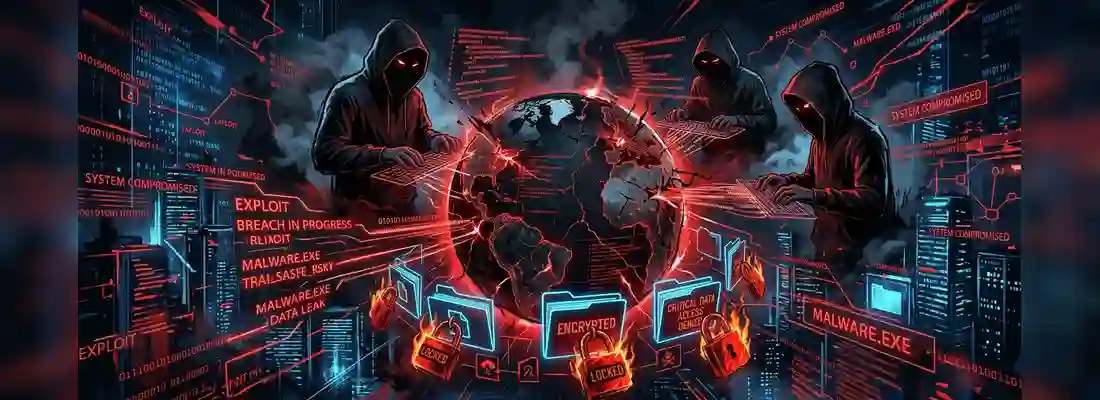
The recent supply-chain attack by North Korean hackers proved how potentially harmful this can be. The hackers used a popular open-source component called Axios, which enables communication between applications and online services. A software update was compromised to include malicious code, which could lead to credential theft and access to the system in macOS, Windows and Linux environments.
Not all the significance of that incident lay in the package. It was the method. Attackers went after software that developers already trusted. That's the worst-case scenario for bitcoin infrastructure. Once a package used by wallet providers, trading tools, or exchange services is compromised, malicious code might spread through legitimate update channels.
Binance has large platforms with extensive investment in security, monitoring, and risk controls, but it's a complicated ecosystem. Open-source components form the core of software supply chains for exchanges, apps and analytics tools.
Crypto Hackers Follow the Money
Theft of cryptocurrencies is a prominent category of cybercrime. As for the first half of 2025, over $2.17 billion was already stolen from crypto services, exceeding the total for 2024. The Bybit hack, which lost $1.5 billion, is the biggest and most memorable hack in the market at present, underscoring how quickly a single hacking incident can erode market trust.
Bitcoin owners typically envision private keys, cold storage, or exchange safekeeping. Those are important, but software dependencies are even farther upstream. Tools used in the construction of crypto infrastructure can also be compromised, allowing the attacker to access crypto funds before they even move.
Developer Machines Are Now Part of Bitcoin Security
The developer's laptop has become a big threat. Often, developers have access to repositories, deployment systems, test wallets, internal dashboards, and cloud accounts. During the course of a day's work, a malicious package can be installed, silently stealing secrets or setting up a backdoor.
This is particularly risky given open-source culture's emphasis on speed. Rapid deployment of libraries, testing of new tools, and adoption of community packages. That is the reason for high productivity, but the same is true of trust, which is not necessarily tested.
Bitcoin businesses require stricter regulations in this area. That encompasses package scanning, dependency pinning, software bills of materials, code signing, access constraints and quick credential rotation. It also involves taking a slower pace with some updates if the risk is too great.
Bitcoin Security Has to Move Upstream
The next Bitcoin security threat could be disguised as something that isn't targeting the network. It could appear as a legitimate package update, a hacked maintainer account, a tainted dependency, or a stolen developer token.
For example, that's why Bitcoin security must go upstream. Security for the users equals security for the software supply chain, prior to the code hitting wallets, exchanges and trading platforms. Binance, wallet providers, custody companies and Bitcoin developers are all responsible for it.
Bitcoin's underlying block may still hold up. However, if the surrounding tools are insufficient, users can still lose money. The future of Bitcoin security will not only rely on cryptography and mining power, but also on the ability of the software ecosystem to fend off attackers with ulterior motives who can slip their code under the radar in code that everyone already believes.