
Date: 7 August 2026

Threat intelligence has become an essential part of modern cybersecurity. Security teams, researchers, and threat analysts constantly monitor malicious infrastructure, investigate phishing campaigns, analyze malware distribution, and collect publicly available data from various online sources.
However, one challenge is often underestimated: how researchers connect to those resources.
Using a regular corporate or personal internet connection for threat intelligence can expose the analyst's identity, reveal an organization's infrastructure, trigger blocking mechanisms, or even unintentionally alert threat actors that they are being investigated.
This is why reliable proxy infrastructure has become a fundamental component of secure cybersecurity operations.
The Role of Proxies in Threat Intelligence
Threat intelligence involves gathering information from multiple external sources, including:
- phishing websites;
- malicious domains;
- public malware repositories;
- underground forums;
- social media platforms;
- open-source intelligence (OSINT) resources.
Many of these platforms actively monitor incoming traffic.
Connections originating from corporate IP addresses or repeatedly accessing the same infrastructure may become blocked, rate-limited, or logged by attackers.
A proxy server acts as an intermediary between the researcher and the destination resource. Instead of exposing the analyst's own IP address, requests are routed through another network, reducing unnecessary exposure while allowing analysts to collect publicly available information more safely.
The objective is not anonymity for malicious purposes. Rather, it is operational security (OPSEC): protecting researchers while maintaining consistent access to external resources.
Why Researchers Should Never Investigate from Their Own IP
Threat actors increasingly monitor who visits their infrastructure.
A phishing kit may record visitor IP addresses. A command-and-control server can log every connection attempt. Even a simple web server may capture information about incoming requests.
Using a personal or corporate IP can create several risks:
- Revealing internal company infrastructure;
- Exposing office locations;
- Allowing attackers to fingerprint research activity;
- Causing corporate IPs to be blocked from future investigations;
- Increasing the likelihood of targeted attacks.
Separating investigative activity from production networks is considered a basic cybersecurity best practice. Proxy infrastructure helps create that separation.

Proxy Types for Different Security Research Tasks
Different investigations require different proxy architectures.
Residential Proxies
Residential proxies route traffic through IP addresses assigned by Internet Service Providers to real users.
They are commonly used for:
- OSINT investigations;
- Phishing page monitoring;
- Regional content verification;
- Public web research.
Static ISP Proxies
Static ISP proxies combine the stability of dedicated IP addresses with ISP-assigned networks.
They are commonly used for:
- Long-term threat monitoring;
- Continuous data collection;
- Persistent analyst sessions;
- Account-based security research.
Datacenter Proxies
Datacenter proxies provide high speed and predictable performance.
They are commonly used for:
- Automated collection of public data;
- Large-scale security research;
- Infrastructure monitoring;
- Vulnerability verification.
Mobile Proxies
Mobile proxies route traffic through IP addresses assigned by mobile network operators.
They are commonly used for:
- Mobile application security testing;
- Verification of region-specific mobile content;
- Analysis of mobile-focused phishing campaigns;
- Testing services that behave differently for mobile users;
- OSINT investigations requiring genuine mobile network connections.
Best Practices for Secure Proxy Usage
Deploying proxies alone does not guarantee secure research operations. Security teams typically follow several operational practices:
- Separate research infrastructure from corporate networks;
- Use dedicated proxy pools for different projects;
- Avoid mixing investigation traffic with everyday browsing;
- Rotate IPs for large-scale data collection;
- Maintain static IPs for long-term investigations;
- Comply with local laws, organizational policies, and platform terms of service.
Well-designed proxy infrastructure supports security research, but it should always be combined with proper operational security procedures.

Choosing a Proxy Provider for Security Teams
When evaluating a proxy provider for cybersecurity research, organizations should focus on more than simply price. Important considerations include:
- Reliable uptime;
- Multiple proxy types;
- Broad geographic coverage;
- Support for HTTP, HTTPS, and SOCKS5;
- Stable network performance;
- Flexible IP rotation;
- Responsive technical support.
Infrastructure quality directly affects the consistency of long-running investigations.
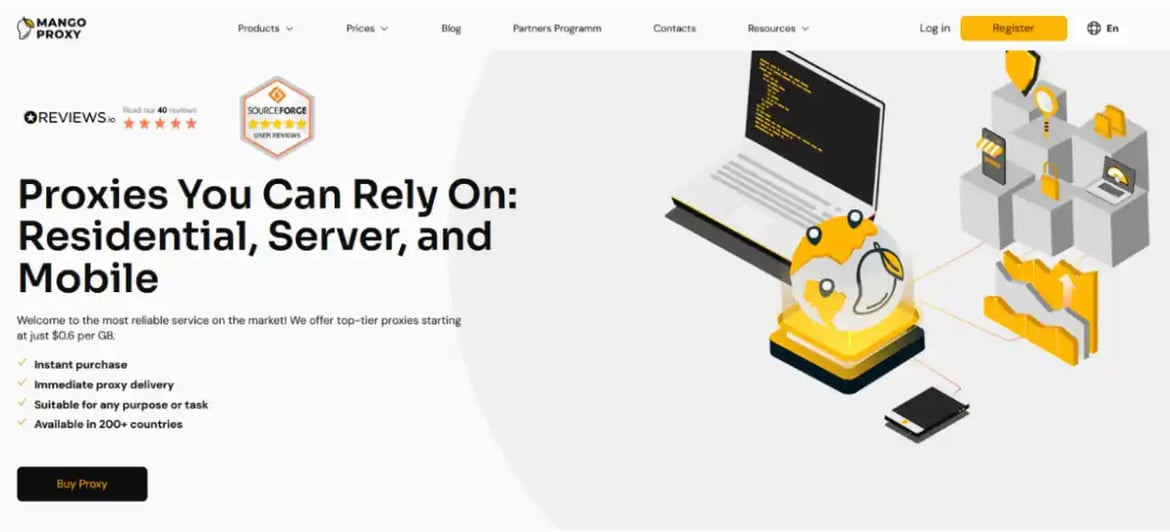
MangoProxy provides residential, ISP static, ISP rotating, datacenter, and mobile proxies that support a wide range of legitimate cybersecurity tasks, including threat intelligence, OSINT, external security research, infrastructure monitoring, and security testing. Organizations can choose the most appropriate proxy type depending on whether stability, scalability, geographic diversity, or mobile connectivity is the primary requirement.
Exclusive for CM Alliance readers: Use promo code CMALLIANCE to get 8% off ISP Static proxies.
Conclusion
Threat intelligence depends not only on analytical expertise but also on secure infrastructure. Using personal or corporate IP addresses for investigations unnecessarily increases operational risk. Proper proxy infrastructure helps security professionals isolate investigative traffic from production environments, reduce unnecessary exposure, and maintain reliable access to publicly available information.
As cyber threats continue to evolve, investing in reliable proxy infrastructure has become an important part of building resilient, secure, and effective threat intelligence operations.

.webp)
.webp)

.webp)