
Date: 19 January 2026
.webp?width=1170&name=cloud_models_cropped%20(1).webp)
Cloud service models are often explained in terms of convenience: how fast you can deploy, how little infrastructure you need to manage, or how easy it is to scale. For high-load systems, those explanations are incomplete.
When traffic, data volume, or internal system pressure grows, projects rarely fail because “the cloud didn’t scale.” They fail because performance becomes unpredictable, network paths saturate, storage latency spikes, or costs grow faster than usage.
This article explains IaaS, PaaS, and SaaS specifically through the lens of high-load and scalable infrastructure. It aims to help you choose the right model based on real operational constraints, not abstractions.
Why High-Load Changes the Cloud Conversation?
For small or early-stage applications, almost any cloud model works. At scale, the questions change:
- Can the system sustain constant throughput, not just short spikes?
- Can you predict latency and cost month over month?
- Can the architecture evolve without rebuilding everything?
- Do you control where and how bottlenecks are resolved?
High-load environments expose weaknesses in network design, storage behavior, virtualization overhead, and pricing models. That’s where choosing the wrong service model becomes expensive.
What “High-Load” Really Means in Practice?
High-load is not just “many users.” It usually involves a combination of:
- Sustained traffic, not only bursts
- East–west traffic between services, not just user-facing requests
- High I/O pressure on storage systems
- Latency sensitivity, especially for real-time or transactional workloads
- Cost sensitivity, where inefficiencies compound quickly.
A system serving 10,000 users can be lightweight. A system moving terabytes per hour between services is not.

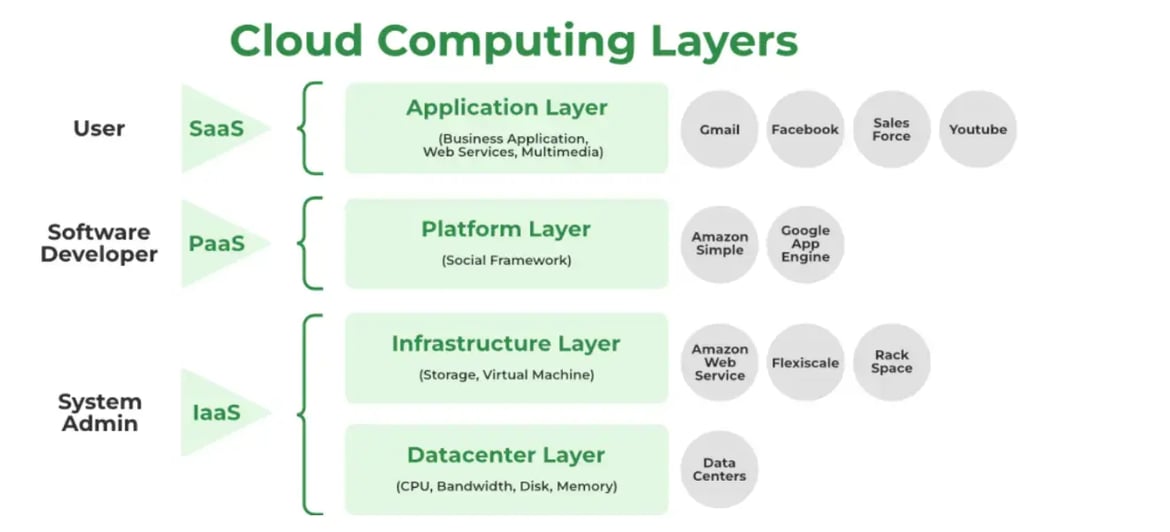
Cloud Service Models at a Glance
Before diving deeper, here’s a concise overview:
|
Model |
What You Manage |
What the Provider Manages |
Typical Goal |
|
IaaS |
OS, runtime, apps, data |
Hardware, facilities, base networking |
Control and flexibility |
|
PaaS |
Apps and data |
OS, runtime, scaling logic |
Development speed |
|
SaaS |
Configuration and users |
Everything |
Immediate usability |
The differences matter most after your system is already under load.
IaaS for High-Load Projects
Infrastructure as a Service (IaaS) provides the most control over how a system behaves under pressure.
You manage:
- Operating systems and kernels
- Runtime and application architecture
- Scaling logic and failure handling
The provider supplies:
- Compute, storage, and networking
- Physical facilities and base connectivity
For high-load systems, IaaS works best when it includes dedicated hardware, predictable networking, and the ability to design around real bottlenecks, not abstract ones.
This is why many teams rely on infrastructure hosting services built on dedicated servers rather than shared cloud instances.
Strengths of IaaS at Scale
- Full control over performance tuning
- Ability to design custom network and storage layouts
- Easier long-term cost predictability.
Tradeoffs
- Requires operational expertise
- Scaling is architectural, not automatic
- Responsibility shifts toward the engineering discipline.
For systems with stable or steadily growing loads, IaaS often scales more predictably than higher-level abstractions.

How PaaS Supports Rapid Development but Limits Infrastructure Control?
Platform as a Service (PaaS) is designed to accelerate development.
It removes the need to manage:
- Servers and operating systems
- Runtimes and middleware
- Much of the scaling logic.
For high-load projects, PaaS works well when:
- The workload is stateless or loosely coupled
- Performance requirements are moderate
- Vendor constraints are acceptable.
Where PaaS Hits Limits?
- Limited control over networking and storage behavior
- Runtime and framework lock-in
- Performance ceilings that cannot be tuned
- Difficult migrations once the load is high.
PaaS is excellent for rapid iteration, but it often becomes a constraint when systems require fine-grained performance optimization.
SaaS Limitations for High-Load and Performance-Critical Systems
Software as a Service (SaaS) removes infrastructure entirely from the equation.
It’s ideal for:
- CRM, ticketing, analytics, collaboration tools
- Internal business workflows
- Standardized processes.
It is rarely suitable for:
- Core production workloads
- Latency-sensitive systems
- Custom performance-critical logic.
At high scale, SaaS limitations include:
- Minimal control over performance
- Data gravity and integration complexity
- Vendor-dependent availability and pricing.
Most high-load architectures still use SaaS but only at the edges, not at the core.
Control, Predictability, and Failure Domains
The real difference between IaaS, PaaS, and SaaS emerges under stress.
|
Criterion |
IaaS |
PaaS |
SaaS |
|
Performance tuning |
Full |
Limited |
None |
|
Cost predictability |
High (with fixed resources) |
Medium |
Tied to usage tiers |
|
Network control |
Full or partial |
Minimal |
None |
|
Failure isolation |
Architectural |
Platform-defined |
Vendor-defined |
|
Long-term flexibility |
High |
Medium |
Low |
For high-load systems, predictability is often more valuable than elasticity.
Hybrid Architectures That Scale in Reality
In practice, most mature systems use a hybrid approach:
- SaaS for office tools, CRM, and support systems
- PaaS for development environments and experimentation
- IaaS for the production core.
This allows teams to:
- Move fast where speed matters
- Control performance where the load is critical
- Keep costs stable as usage grows.
Advanced Hosting specializes in custom hosting solutions that support this hybrid model, allowing teams to combine dedicated infrastructure with cloud-native workflows without sacrificing control.

When Does Dedicated Infrastructure Become a Better Version of IaaS?
Many teams start in public cloud IaaS and later migrate parts of their system to dedicated environments when they encounter:
- High and unpredictable bandwidth costs
- Inconsistent VM performance
- Storage latency under sustained load
- Difficulty controlling east–west traffic.
Dedicated infrastructure often delivers:
- Better performance per dollar
- Stable network throughput
- Clear failure domains
- Fixed monthly costs are independent of traffic spikes.
This is especially true for video platforms, data-heavy systems, and internal service meshes.
A High-Load Decision Checklist
Before choosing a model, ask:
- Is my load spiky, sustained, or both?
- Where is the bottleneck likely to appear first?
- Do I need control over network paths and storage behaviour?
- Can my team operate the infrastructure, or should it be engineered for us?
- Do I need predictable monthly costs?
The clearer these answers are, the easier the model choice becomes.
The Best Model Is the One That Fails Last
There is no universal “best” cloud model.
- SaaS optimizes for convenience
- PaaS optimizes for development speed
- IaaS optimizes for control and predictability.
For high-load and scalable systems, long-term success usually depends on how well the infrastructure behaves after the first growth phase, not before it.
Engineering-led decisions, clear ownership of bottlenecks, and predictable infrastructure tend to scale further and fail later.

.webp)
.webp)
.webp)
.webp)