Date: 23 December 2025
Every tool that touches data is a potential entry point. In the age of connected vehicles, software-defined features, and over-the-air logic, the line between convenience and exposure is razor-thin. The cybersecurity landscape of the automotive industry is evolving fast. This includes VIN decoders.
Services that decode VINs do not interface with vehicle systems. They don’t access sensors, infotainment modules, or ECUs. They read only what’s already public — not what’s vulnerable.
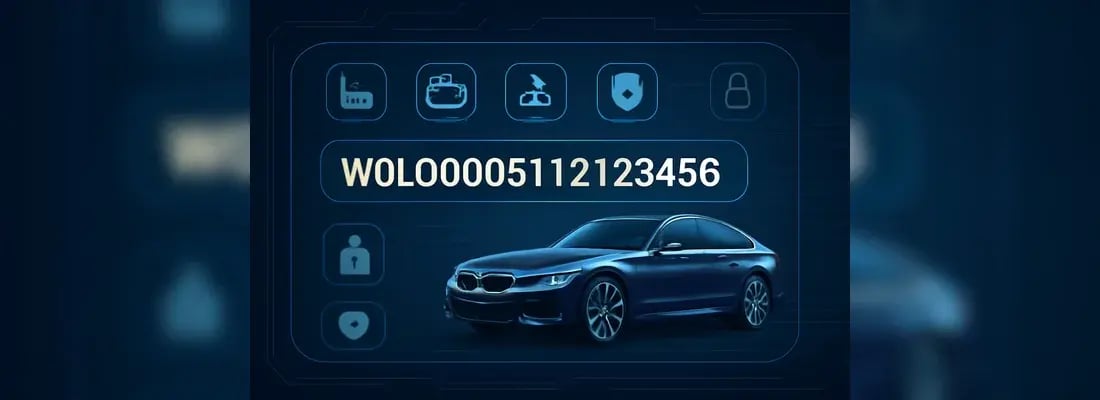
The Free BMW VIN Decoder: EpicVIN works as an isolated platform. It doesn’t control hardware or connect to a car. It deciphers meaning from static VIN data, staying outside the attack surface of modern automobiles.
The EpicVIN Free BMW VIN Decoder offers a fast and secure way to access detailed vehicle information using only the 17-digit VIN. Designed for BMW owners, buyers, and enthusiasts, this tool reveals factory specifications, engine performance data, transmission type, safety features, and historical records such as title status, mileage, recalls, and accident history.

What Is Vehicle Cybersecurity and Why It Matters
Understanding what is vehicle cybersecurity means understanding protection. This includes every element from keyless systems to embedded software. Vehicle functions depend on digital control. That makes vehicle systems sensitive. Cybersecurity in the automotive industry protects in-vehicle networks from being exploited.
VIN decoders don’t need to connect to those networks. They don’t control ECUs. That alone reduces cybersecurity risks.
VIN Decoding Is Air-Gapped by Design
There is no wireless signal. No controller area network communication. No infotainment system handshake. VIN decoding tools never connect with telematics or infotainment systems. This means no attacker can use the decoder to intercept vehicle signals.
These tools are built on static data. The interface is limited to database lookups. That’s not where cyber criminals go hunting.
AI and Data Extraction Without Risk
Some decoding platforms now use AI-powered logic to interpret model-level complexity. This does not introduce cyber risk.
The AI improves output without touching any ECU or communication protocols. There is no telemetry. No attack surface. AI refines results — it doesn’t create pathways.
Unlike embedded software in vehicles, this AI isn’t in control of physical systems. There’s no engine performance tuning or drivetrain access.
Compliance Without Contact
VIN decoders may sit outside the car, but they’re still built with compliance in mind. Top-tier providers follow cybersecurity standards like ISO 21434 even without being required.
This includes secure coding, threat modeling, and risk controls. Software development processes include authentication safeguards. APIs use encryption. No lifecycle access is ever required.
|
Cybersecurity Practice |
VIN Decoder Role |
|
ISO 21434 compliance |
Voluntary |
|
Secure APIs |
Mandatory |
|
Software code reviews |
Frequent |
|
Wireless stack access |
None |
|
OTA updates |
Not involved |
No Touching of ECUs or In-Vehicle Layers
VIN decoders don’t trigger ECU actions. They don’t ask ECUs to communicate or make ECUs operate. They simply read the VIN string and return results.
This means they’re excluded from risk categories involving hardware security modules or embedded systems. The isolation is complete.
Attackers Seek Entry, VIN Decoders Give None
Cyber criminals want control. They target systems with permissions. Infotainment systems. Keyless entry modules. Ethernet nodes. VIN decoders offer no such doors.
There is nothing to intercept. No navigation systems to hijack. No sensor readings to corrupt. The decoder performs one task — decode — and exits.
The Role of Secure Architecture and APIs
Even though VIN platforms are passive, the best still follow strict architecture. That includes network segmentation and access control for APIs. Teams that embed claude code security checks into their API development workflow can catch misconfigurations and permission issues before they ever reach production.
There is no MQTT stack. No direct exposure. No telematics feedback. Just secure endpoints with one function.
Authentication and session control matter here too. Threat intelligence feeds flag anomalies. Even a safe tool stays protected.
VIN Decoders Never Interfere With the Supply Chain
Unlike OEMs and suppliers who must manage the entire software-defined lifecycle, VIN platforms sit far away. They’re not part of supply chain management. They don’t ship OTA updates.
This eliminates a major class of security issues. No supplier logic is required. No firmware is touched.
Emerging Technologies and the Myth of Risk
Many users assume that emerging technologies bring new danger. That logic applies to SDVs, not VIN decoders.
Decoding a VIN using AI or cloud-based tools doesn't touch vehicle security layers. These platforms don’t interact with connected vehicles. They don’t modify software code. They don’t enable cyber-physical bridges.

Cybersecurity Threats VIN Decoders Avoid Entirely
Cybersecurity threats often emerge from real-time systems. VIN decoders don’t operate in real time. They don’t process inputs from vehicles. That single distinction removes dozens of potential cyberattack scenarios.
VIN platforms don’t connect to infotainment. They don’t sync with vehicle systems. They can’t exploit vulnerabilities because they never touch the car. There is no in-vehicle attack vector.
No Connection to Wireless or Keyless Technologies
Tools that interface with keyless entry systems or wireless APIs open risk. VIN decoders don’t use key fob signals. They don’t need bluetooth or LTE. No device pairing. No pairing means no opening.
Unlike systems that control door locks or push-button ignition, these tools don’t send or receive any data from hardware. No attacker can redirect signals because no signal exists to begin with.
Why Modern Vehicles Are Safe From Decoder Exploits
Modern vehicles contain dozens of ECUs. They use telematics. Many use ethernet for speed. Others connect via embedded software. VIN decoding avoids them all.
VIN tools don’t access communication protocols. They don’t query CAN buses. They don’t connect with navigation or infotainment. This removes risk across every architecture layer.
Key Differences Between VIN Decoding and Vehicle Access
|
Component |
VIN Decoders |
In-Vehicle Software |
|
Access to ECUs |
No |
Yes |
|
Connects via CAN |
No |
Yes |
|
Interfaces with infotainment |
No |
Yes |
|
Affects engine performance |
No |
Sometimes |
|
Targets for cyberattacks |
Unlikely |
Common |
Threat Modeling Reveals No Decoder Pathways
Threat modeling is used in cybersecurity testing. It simulates how an attacker might access data. VIN decoders rank low across every model. They do not expose attack vectors.
Intrusion detection systems monitor real-time data streams. VIN services operate as passive lookups. They don’t generate live data. There’s nothing for IDS tools to watch.
VIN Decoders Require No Lifecycle Permission
The vehicle software lifecycle includes development testing release updates. VIN decoders need none of these. They don’t touch firmware. They don’t receive ota updates. They stay outside the vehicle security zone.
This makes compliance easier. It also safeguards the supply chain from added complexity.
Why Cybersecurity Standards Still Apply
Even though VIN platforms don’t control vehicle functions, they still follow cybersecurity standards. These include:
- ISO 21434 process awareness
- Secure coding principles
- API authentication
- Network segmentation
- Security testing
Best practices ensure protection from cyber threats even for disconnected systems.

Why VIN Tools Remain Secure Even in Large-Scale Attacks
In large-scale attacks targeting connected vehicles or EV charging networks, VIN decoders are untouched. They don’t process payments. They don’t manage critical systems. They exist in isolation.
No VIN tool can trigger a cyber-physical exploit. That’s the foundation of its security advantage.
Conclusion: Isolation Is Security
Cybersecurity depends on minimizing exposure. VIN decoders offer a model built on isolation. They don’t access software-defined systems or vehicle networks. They don’t run code on the vehicle.
That’s why researchers demonstrated no threat when testing VIN platforms. There’s nothing to exploit. They offer decoding, not control.
VIN decoders safeguard users by staying out of the vehicle entirely. No cyber issues. No vehicle risk. Just clarity.
FAQs
- Can a VIN decoder be used to exploit vulnerabilities in my car?
No. VIN decoders don’t connect to vehicle systems. They cannot run commands or exploit entry points. - Does AI in VIN decoders pose cybersecurity risks?
No. AI improves data interpretation. It does not touch vehicle code or architecture. - Why are VIN decoders excluded from ISO 21434 regulation?
They operate outside the embedded lifecycle. Still, many follow ISO principles voluntarily. - Can a hacker intercept VIN decoder signals wirelessly?
No. VIN tools use database queries. There’s no wireless interface to intercept. - Do VIN decoders affect infotainment or navigation systems?
Never. They decode only. They cannot reach infotainment or navigation layers.

.webp)