Date: 6 January 2026
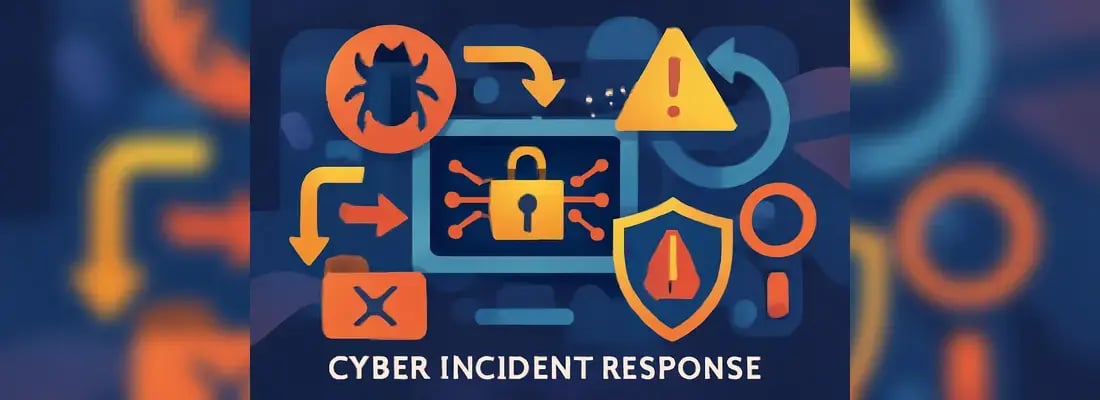
Cyber incidents no longer test just technology. They test people, decision-making, governance, and readiness under pressure. Cyber Incident Response Training exists to close that gap.
Cyber Incident Response Training prepares your organisation to respond effectively to cyber attacks. It takes course attendees through structured frameworks that help them understand how to implement incident response processes and playbooks. They get a solid picture of the importance of decision-making in a crisis through realistic scenarios. It will also give your team an insight into the regulatory and compliance requirements that are critical to your business and industry.
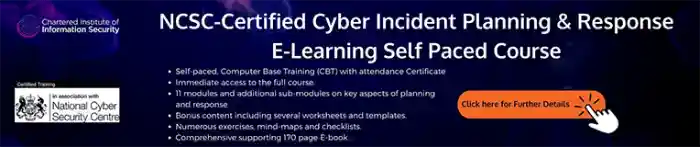
Cyber Management Alliance’s NCSC Assured Cyber Incident Planning and Response training course is renowned the world over for combining relevant theory with practical guidance for continuous improvement in cyber resilience. The training is conducted by globally recognized cybersecurity practitioners whose real-world experience adds a nuanced and real-world depth to the course content.
This guide answers all your questions about Cyber Incident Response Training. It will help you understand what differentiates Incident Response training from other types of cybersecurity training. It will also help you recognise why this form of training is critical for all teams today - technical as well as non-technical.

What Is Cyber Incident Response Training?
Cyber Incident Response Training equips your organisation with the skills, processes, and confidence needed to detect, manage, contain, and recover from cyber incidents. Unlike cybersecurity awareness training, it focuses on:
- Real incidents and how to prepare for them
- Critical cybersecurity documentation needed for effective response - including but not limited to a cybersecurity policy, cyber incident response plans, cyber incident response playbooks
- How to make tough decisions under pressure in order to mitigate the damage from a ransomware attack or a data breach
- How to implement NIST's Computer Security Incident Handling Guide
- The core concepts of incident triage, OODA and their relevance in building a cyber resilient organisation
What Is Typically Covered in Cyber Incident Planning and Response Training?
- Important Incident response frameworks (NIST, NCSC, ISO) - Why they matter and how to implement them?
- Roles and responsibilities of different departments in Cybersecurity Incident Response. This includes the technical, legal and communications teams as well as executive leadership.
- Understanding threat actors - who they might be and why they would harm your organisation. What is the Cyber Kill Chain?
- What is visibility and why it's so important in your cyber resiliency strategy.
- How to identify your Crown Jewels or most critical business assets
- What is the Golden Hour in Incident Response?
- Escalation paths and decision authority
- Regulatory and reporting obligations - How and why must evidence be protected and how to ensure its forensic integrity
- Communications and crisis management
- How to evaluate your technology stack and ensure it’s in alignment with your incident response goals
- Post-incident lessons learned and how to leverage them for continuous improvement

Who is the NCSC Assured Cyber Incident Response Training For?
|
Designed and Important For |
Not Built For |
|
|
The Top Most Asked Questions About Cyber Incident Response Training
1. Cyber Incident Response Training vs Cybersecurity Awareness Training: What’s the Difference?
|
Aspect |
Cybersecurity Awareness Training |
Cyber Incident Response Training |
|
Primary goal |
How to prevent incidents |
How to manage and response to incidents |
|
Focus |
Individual behaviour |
Organisational response |
|
Audience |
All employees |
Technical, executive, legal, HR, PR and Comms |
|
Timing |
Before an incident |
During and after an incident |
|
Format |
Short, recurring sessions |
In-depth, scenario-driven |
|
Regulatory Value |
Baseline expectation |
Demonstrates preparedness |
2. Cyber Incident Response Training vs Cyber Tabletop Exercises: What’s the Difference?
|
Aspect |
Incident Response Training |
Cyber Tabletop Exercises |
|
Purpose |
Build knowledge and capability |
Test readiness |
|
Format |
Instructor-led, structured |
Scenario-based simulation |
|
Audience |
How to respond |
Testing how well the organisation responds |
|
Timing |
Broad (IT, security, execs) |
Cross-functional leadership |
|
Outcome |
Skills & confidence |
Gaps & improvements |
3. Who Should Attend Cyber Incident Response Training?
|
Role |
Why They Matter |
|
Security & IT Teams |
They are the most important when it comes to technical containment and recovery. |
|
Executives & Board |
The executive board holds the ultimate responsibility and accountability for business continuity and the bottom-line to shareholders. They must understand the criticality of their high-risk decisions and how to take those decisions. |
|
Legal & Compliance |
They play a critical role in evaluating the organisational liability in case of cyber attacks and data breaches. They also play the most vital role in regulatory notifications and achieving compliance. |
|
Communications |
The Communications and PR team is vital to reputation management in case of a cybersecurity incident. The onus of interacting with the media and maintaining stakeholder trust lies with them. |
|
Human Resources |
HR has to manage employee communications during a crisis. They also play an important role in access-related actions. HR also helps identify and handle insider threats. This department ensures people-related risks are controlled quickly during a crisis. |
Critical Point to Note: Cyber Incident response fails when only technical teams are trained. Success requires organisational alignment.
4. What Frameworks Should Cyber Incident Response Training Align With?
High-quality training should align with recognised frameworks, including:
- NIST Incident Response Lifecycle
- NCSC Cyber Assessment Framework (UK)
- ISO/IEC 27035
- NIST CSF 2.0 (Govern Function)
- Regulatory overlays (GDPR, DORA, NIS2, SEC)
Framework alignment ensures your response is not just effective but also defensible.
Important: Framework-aligned training improves consistency, regulatory confidence, and audit readiness.
5. How Long Does Cyber Incident Response Training Take?
|
Format |
Typical Duration |
|
Awareness-level |
2-3 hours |
|
Practitioner-level |
1 Day |
|
Executive-level |
Half a Day |
6. Is Cyber Incident Response Training Mandatory?
In many cases, yes, indirectly.
Training supports compliance with:
- GDPR (Articles 32 & 33)
- NIS2
- EU DORA
- ISO 27001 & ISO 22301
- SEC cyber disclosure rules
While not always explicitly mandated, lack of training is often cited after breaches. Training is also increasingly viewed as a regulatory expectation, not a nice-to-have.
7. Common Mistakes To Avoid When It Comes to Incident Response Training ?
|
Mistake |
Why it Fails |
|
Too technical |
Cyber Incident Response is as much an Executive, HR, PR and legal mandate as it is technical. Keeping the training restricted to IT teams and their role is a grave error. Decision-makers can never be ignored when it comes to managing a cyber incident and resuming operations swiftly. |
|
No Executive Involvement |
Excluding executives from Incident Response training leaves the people who make the highest-impact decisions unprepared during a real crisis. When leadership hesitates or missteps, technical response alone cannot prevent reputational, legal, and financial damage. |
|
One-off Training |
Cyber risks are ever-evolving. In order to understand the emerging risks and how to mitigate them, it's imperative that Incident Response training be conducted regularly (at least annually for most organisations). |
|
Irrelevant Scenarios |
Real-world examples and relevant cyber attack scenarios turn abstract risks into tangible threats. Participants are able to better understand how attacks actually unfold and what their roles and responsibilities in those scenarios will be. This clarity improves decision-making, communication, and confidence. |
8. How Do You Measure ROI from Incident Response Training?
Metrics to track
- Mean time to containment
- Decision latency
- Escalation accuracy
- Exercise outcomes
- Audit findings
Conclusion: ROI is measured in reduced chaos, faster recovery, and reputational protection.

A Quick Checklist Before You Choose A Cyber Incident Response Training
✔ Framework-aligned
✔ Deeply experienced trainers
✔ Relevant course content
✔ Role-based scenarios
✔ Executive participation
✔ Regulatory context included
✔ Practical outputs (playbooks, actions)
Glossary of Incident Response related terms
- Incident Response: A coordinated, well-rehearsed approach to managing and recovering from cyber incidents.
- Cyber Tabletop Exercise: A discussion-based, cyber incident scenario simulation that helps you test how effective your Incident Response plan is and how well your team understands their roles and responsibilities.
- MTTC: Mean Time to Containment
- Playbook: Step-by-step incident response guide
- NIST CSF: Cybersecurity Framework by NIST
- DORA: Digital Operational Resilience Act
Cyber Management Alliance: The World Leaders in Cyber Security Incident Response Training
You have now probably fully understood the criticality of incident response training for your organisation in 2026. The next step is choosing a partner that does more than teach theory.
Cyber Management Alliance is recognised globally for its leadership in cyber incident response training and crisis preparedness. As the creators of the NCSC-Assured Cyber Incident Planning and Response training, we have helped hundreds of clients across sectors bolster their cyber resilience over the years.
Our training and cybersecurity consultancy services sit at the intersection of real-world incident response, regulatory expectations, and executive decision-making. The Cyber Incident Planning and Response training is designed to help organisations respond with confidence, clarity, and control when cyber incidents occur. What sets it apart is the deep and rich experience of our trainers and their ability to translate complex cyber risk into practical action. This real-world expertise is also embedded into our course content which is up-to-date, relevant and immediately actionable.
Course participants also have the option to get certified in Cyber Incident Response after completing our training. They can sit for the online exam administered by APMG and proctored by ProctorU, receiving digital badges upon successful completion.
Partnering with us means investing in lasting resilience, not one-off training. As cyber threats evolve and regulatory expectations rise, organisations need a trusted partner that remains current, credible, and globally respected. Reach out to us today to understand how we can help bolster your cyber readiness in 2026.

.webp)